Healing Springs & Spa
Why the mineral springs of Mariánské Lázně (Marienbad) differ in composition, how the drinking cure works, which indications the spa physician prescribes it for and what the studies say.
The mineral springs of Marienbad
Mariánské Lázně (Marienbad) stands on unusual ground: more than forty mineral springs rise within the town, and roughly another hundred in its surroundings. They are cold acidulous waters at 7 to 10 °C all year round, carbonated by natural carbon dioxide of volcanic origin — which sets them fundamentally apart from the hot thermal springs of nearby Karlovy Vary. Each spring passes through different layers of rock and therefore has a different composition: some are strongly mineralised and bitter-salty, others mild and almost neutral in taste.
It is precisely this variety that explains why the drinking cure — drinking prescribed mineral water directly at the spring — has been practised in Marienbad for over two centuries, and why it is always drawn up by a spa physician. This page explains how the waters differ, how the drinking cure works and for which diagnoses it forms part of treatment. The location, access, opening hours, taste and temperature of the individual springs are in the springs overview.
Why the waters differ

Balneology classifies mineral waters by their predominant dissolved substances. In Marienbad several types occur side by side, and that matters for the drinking cure: one water is prescribed for digestive complaints, another for diseases of the urinary tract.
- Carbon dioxide. Common to all the local springs — hence the name acidulous waters. It gives the water its sparkle and fresh taste; at high concentration it rises at the Maria Spring as an almost pure gas, which the spa uses in CO₂ therapy.
- Sulphates and sodium (Glauber's salt). The characteristic component of the Cross Spring and the Ferdinand Spring, the town's two most strongly mineralised waters. Sodium sulphate, or Glauber's salt, gives the water a bitter taste and a laxative effect; these springs are traditionally prescribed for diseases of the digestive system and metabolic disorders.
- Bicarbonates, calcium and magnesium. The Rudolph Spring is rich in calcium and magnesium; the Caroline Spring contains magnesium and calcium, but less calcium than the Rudolph Spring. Both waters are traditionally prescribed for diseases of the kidneys and urinary tract; the Rudolph Spring also features in drinking cures for osteoporosis.
- Iron. The Ambrose Spring and the forest springs in the surroundings (Farská Kyselka, Balbín Spring) contain iron, which leaves a typical rust-coloured deposit at the outlet. In the spa tradition, iron-bearing waters were prescribed for anaemia; today the physician decides on their inclusion according to the blood count.
- Alkaline sodium waters. The Forest Spring is a bicarbonate sodium acidulous water. It is traditionally used for diseases of the upper respiratory tract — including inhalation and gargling — and for stomach complaints.
A detailed profile of each spring, its location and taste is given in the springs overview; the history and curiosities of the individual outlets in the guide to the mineral springs. The analyses of the springs side by side — pH, sodium, magnesium, calcium, iron, mineralisation and CO₂ — are on the page Spring analyses and where to drink.
How the drinking cure works
The drinking cure is the oldest and simplest way in which the Marienbad springs are used. Its form has changed little in two centuries:
- Initial examination. The spa physician assesses the diagnosis, other illnesses, medicines taken and the examination results the patient brings along, and draws up an individual schedule: the spring or combination of springs, the number of cups, the time of day and the interval before meals.
- Morning cure. The main part of the drinking cure takes place in the morning on an empty stomach. The guest goes with a porcelain spa cup to the pavilion of the prescribed spring, fills it and drinks the water slowly, in small sips, while walking along the colonnade or through the park. The walk is part of the procedure, not just its backdrop.
- Further doses during the day. According to the schedule, drinking is repeated before lunch and possibly in the afternoon, often from a different spring than in the morning. Water from different springs is not combined at will — each has a different composition.
- Check-ups and adjustments. During the stay the physician adjusts the schedule according to how the patient tolerates the water and what the check-up examinations show.

The water from the springs is cold (7–10 °C); the temperature at which it should be drunk is, like the quantity, part of the medical prescription. Besides drinking, mineral water from the Forest Spring is also used for inhalations and gargling in diseases of the respiratory tract — these procedures are described on the climate therapy page.
The drinking cure lasts for the whole of the treatment stay. Its length is determined not by the procedure but by the item of the Czech indication list the patient arrives with: in comprehensive spa care it is 21 or 28 days depending on the indication, in contributory care 14 or 21 days; self-paying guests choose the length in consultation with the spa physician. Practical advice — how to handle the cup, what to bring and what a spa day looks like — is summarised in the guide to the drinking cure.
For guests of the Ensana hotels the drinking cure at the Cross Spring Pavilion is free of charge, according to the doctor’s recommendation; it is one of the benefits of the Ensana Marienbad Card, which every hotel guest receives.
Practical rules for the drinking cure
A few rules that the spa physicians recommend to everyone, whichever spring you have been prescribed:
- Cup size by age. The spa cup for children aged 3 to 6 holds 100 ml, for schoolchildren aged 7 to 12 150 ml, and for adults and children over 12 220 ml.
- Slowly, in sips, while walking. The local springs contain a lot of carbon dioxide, so they are drunk slowly, in small sips during an unhurried walk.
- A pause between cups. If several cups are prescribed at once, leave 10–15 minutes between them.
- No mineral water is suitable for drinking all the time. Even healing springs should not be your only source of fluids; the drinking cure is limited in time and follows the prescription.
- Mind the sodium. The Cross Spring and the Ferdinand Spring contain more than two grams of sodium per litre. If you have high blood pressure or heart disease, talk to your doctor before starting a drinking cure.
- Trust your doctor. Follow their prescription for the choice of spring and the amount.
Advice from Dr Pavel Knára, former head physician: drink the mineral water straight at the spring if you can. The ferrous iron that most of the local springs contain oxidises in the air — water in a bottle gradually turns cloudy and a rust-coloured sediment settles at the bottom. If you take water with you, close the bottle, keep it in the fridge and drink it by the next day at the latest.
The analyses of the main springs — pH, sodium, magnesium, calcium and iron content, mineralisation and where each spring can be tasted — are set out on the page Spring analyses and where to drink.
Why the physician decides which spring
The Marienbad springs are not table water. Strongly mineralised waters with Glauber's salt have a laxative effect and contain a considerable amount of sodium; bicarbonate waters change the pH of the urine. In a correctly chosen patient that is the goal of treatment — in another patient it may be undesirable. A review of drinking cures in digestive and biliary diseases concludes that the type of water determines which indication it is used for, and that dose and timing are set by the physician (Dumitrescu et al., 2021, Exp Ther Med).
Hence the following applies:
- Who chooses the spring. Whether the drinking cure is included in the treatment plan, and the choice of spring, daily quantity and timing, is decided by the spa physician after the initial examination — for patients with urinary stones only after analysis of the stone and urine, and for patients with heart disease, kidney disease or high blood pressure in cooperation with their treating doctor.
- When to seek advice beforehand. If you have a prescribed fluid or salt restriction (for example in heart or kidney failure), take diuretics or suffer from recurrent diarrhoea, consult the spa physician before starting the drinking cure and do not drink mineral water in larger quantities without their schedule.
- General contraindications. The general contraindications of spa rehabilitation care under the Czech indication list apply to the drinking cure — among others all diseases in the acute stage, clinical signs of circulatory failure, infectious diseases transmissible from person to person and pregnancy. The complete list is on the indications and contraindications page.
For a healthy visitor, freely tasting a cup of water at the colonnade is an ordinary part of a spa walk. A therapeutic drinking cure — a prescribed quantity every day for the length of the stay — is something else and belongs in the hands of a physician.
Which conditions the drinking cure is used for
The drinking cure is not a separate item of the Czech indication list (Decree No. 2/2015 Coll.); it is a procedure the spa physician builds into the treatment plan for the diagnosis the patient arrives with. In Marienbad it forms the basis of the programme above all for three indication groups.
Diseases of the digestive system (group III). The traditional domain of the Cross Spring and the Ferdinand Spring. Select your diagnosis to see which type of care and length of stay the list assigns to it:
Digestive system illnesses
Diseases of the digestive system in the indication list
Chronic and recurring illnesses of the stomach and intestines with maldigestion symptoms persisting during standard pharmacotherapy
Conditions after heavy intestinal infections, parasitosis and mycotic diseases
Conditions after stomach, duodenum, oesophagus and intestine surgery with post-resection symptomatology proved by endoscopy
Crohn’s disease
Ulcerative colitis
Chronic diseases of the gall bladder and biliary tract with lithiasis, when surgery is contraindicated
Sclerosing cholangitis
Functional disorders of the biliary tract
Conditions after complicated surgery of the gall bladder and biliary tract, after operations for stenosis and lithiasis of the biliary tract (post-surgical pancreatitis and cholangitis, jaundice, instrumentation of the biliary tract, ERCP)
Conditions after dissolving stones and extracorporeal lithotripsy
Conditions after acute hepatitis of any aetiology
Chronic hepatitis with persisting positive markers
Associated auto-immune hepatitis
Primary biliary cirrhosis
Conditions after resection operations and liver or pancreas transplantation
Conditions after acute pancreatitis or after exacerbation of chronic pancreatitis
Proved chronic pancreatitis
Whether a stay is appropriate is for your doctor to judge; most international guests arrange the stay privately. Full list of indications and contraindications
Diseases of the urinary system (group VIII). The domain of the bicarbonate waters with calcium and magnesium — the Rudolph and Caroline Springs. More in the article on treatment of the kidneys and urinary tract.
Kidney and urinary tract diseases
Diseases of the urinary system in the indication list
Recurring and chronic non-tubercular inflammations of the kidney and urinary tract resistant to antibiotic and other pharmacological treatment, in systematic care of a urologist for at least 12 months
Cystic kidney disease
Nephrolithiasis without congestion in the urinary tract
Nephrocalcinosis
Conditions after kidney and urinary tract surgery including endovesical surgery and conditions after complicated prostatectomy and nephrolithotripsy, after-treatment following extracorporeal shock wave lithotripsy
Chronic prostatitis or chronic prostatovesiculitis resistant to pharmacological and antibiotic treatment, in systematic care of a urologist for at least 12 months
Conditions after kidney transplantation with stabilised function of the graft
Donor of the graft (kidney)
Whether a stay is appropriate is for your doctor to judge; most international guests arrange the stay privately. Full list of indications and contraindications
Metabolic disorders (group IV). For diabetes and other metabolic diagnoses, the drinking cure from the Cross Spring is part of a programme centred on supervised exercise, diet and education; what such a stay looks like is described in the article on spa treatment and lifestyle diseases.
Metabolic disorders
Metabolic disorders in the indication list
Diabetes mellitus
Whether a stay is appropriate is for your doctor to judge; most international guests arrange the stay privately. Full list of indications and contraindications
For diseases of the respiratory system (group V), mineral water from the Forest Spring is used for inhalations and gargling as a supplement to respiratory rehabilitation and climate therapy; the list of diagnoses is on the page respiratory system in the indication list. The complete overview of all indication groups treated in Marienbad is on the indications and contraindications page.
What a patient can realistically expect
The drinking cure has a measurable effect where the composition of the water matches the complaint. What controlled studies and guidelines have documented:
- Sulphate waters and intestinal transit. In a double-blind randomised trial of 226 patients with functional constipation, 50% of patients responded to a sulphate-magnesium mineral water after 14 days, compared with 29% with the control water (Dupont et al., 2019, Nutrition). This was a French water of different composition and the study was funded by its producer; it does, however, show the principle behind the traditional use of the Cross Spring — sulphates have a measurable effect on the bowel.
- Bicarbonate waters and urine composition. In a double-blind crossover trial in 34 patients with recurrent calcium oxalate stones, a bicarbonate water raised urinary pH and the excretion of citrate and magnesium, substances that inhibit crystal formation; calcium oxalate supersaturation fell with both waters tested thanks to the larger volume, while the risk of phosphate stones rose (Karagülle et al., 2007, World J Urol). The follow-up lasted only three days — and it is precisely this double effect that is the reason the spring is chosen only after analysis of the stone.
- Fluid volume. According to the European Association of Urology guideline, adequate fluid intake is the basis of preventing recurrent urinary stones, together with a metabolic work-up and treatment targeted at the stone type (Skolarikos et al., 2024, Eur Urol). The drinking cure is a way to acquire a regular drinking routine under supervision and take it home.
For metabolic diagnoses and diseases of the respiratory tract, the drinking cure and inhalations are used on the basis of long spa practice as part of a broader programme drawn up by the spa physician. How the drinking cure affects you is assessed by the physician during your stay on the basis of check-up examinations; the long-term follow-up of urological and nephrological patients in Marienbad is the subject of an ongoing clinical study.
Further procedures from natural healing resources
The springs are one of Marienbad's four natural healing resources. Alongside the drinking cure, the spa physician builds procedures from the other three into the treatment plan:
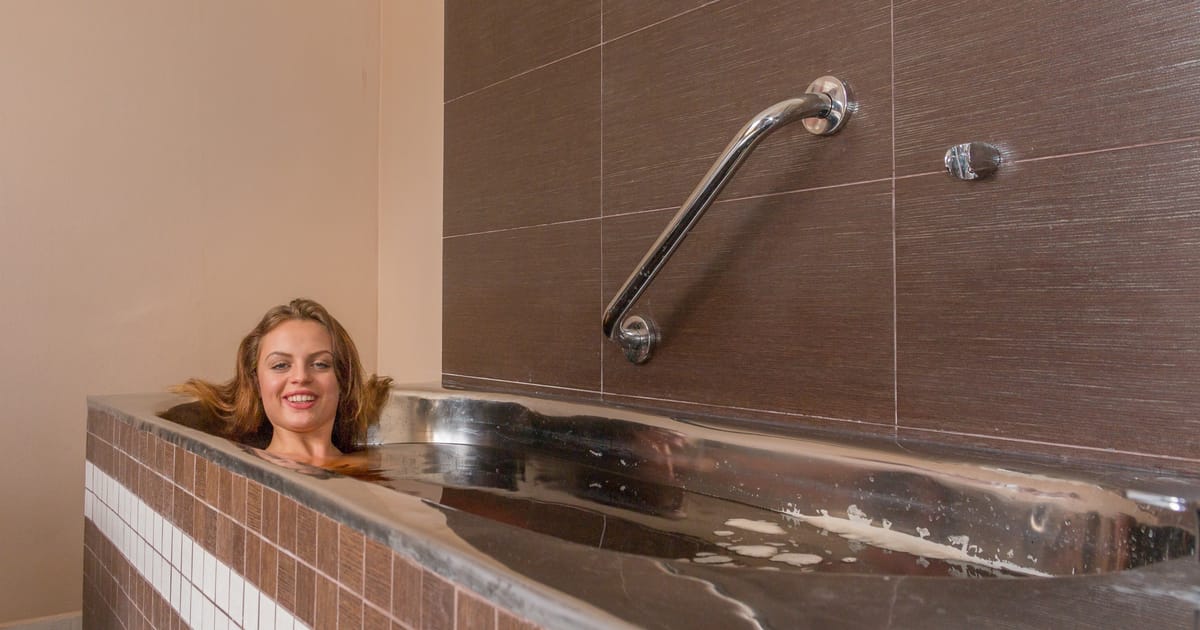
- CO₂ therapy — dry gas baths, carbonated mineral baths and gas injections with natural carbon dioxide from the Maria Spring, used above all for diseases of the circulatory system.
- Peloid therapy — wraps, packs and baths with peat from the Slavkov Forest, used above all for diseases of the musculoskeletal system.
- Climate therapy — the terrain cure, outdoor breathing exercises and inhalations in a sub-montane climate at an altitude of 630 metres.


Which procedures a patient receives, and how many, is set by the spa physician at the initial examination; the individual pages describe how the procedures work, which indications they are used for and when they are not suitable.
A spa tradition since 1818
The springs were known to the inhabitants of the surrounding villages and to the monks of the nearby Teplá monastery long before the spa was founded. Systematic medical use began only at the close of the 18th century: the monastery physician Josef Jan Nehr described the springs, began prescribing them to patients and pushed through the building of the first spa houses. In 1818 Mariánské Lázně was granted the status of a public spa.
Rapid growth followed: spa houses, hotels, colonnades and pavilions over the springs were built, and Marienbad took its place among the spas most sought after by the European nobility. Its guests included monarchs, poets and composers — the most famous of them remains Johann Wolfgang von Goethe, who visited the spa repeatedly between 1820 and 1823 and credited the local water more than all his doctors.
This tradition survived even the turbulent 20th century. Today Marienbad combines the spa tradition with the methods of contemporary medicine: the drinking cure remains the foundation, but it is prescribed on the basis of an examination and within a treatment plan that also includes exercise, diet and other procedures. More about the town's past is on the history page.
Modern spa facilities
The traditional spa houses of Marienbad have been sensitively modernised in recent years without losing their historic character. The Ensana spa hotels, such as Ensana Nové Lázně, combine classic spa architecture with contemporary comfort — guests bathe here in the restored Roman Baths of 1896, once frequented by the British King Edward VII.
Besides the drinking cure and procedures from natural resources, the spa facilities offer physiotherapy, therapeutic exercise, electrotherapy, inhalations and underwater massage. The spa physicians draw up an individual treatment plan for every guest on the basis of the initial examination and adjust it during the stay.
For guests who are looking for rest rather than a treatment cure, there are shorter wellness stays; they are regenerative, not therapeutic, in character. An overview of the hotels and their focus is on the accommodation page.
A short glossary
- Acidulous water (kyselka) — mineral water containing more than 1,000 mg of dissolved carbon dioxide per litre. All the Marienbad springs are cold acidulous waters.
- Medicinal mineral water — the Czech Spa Act (Act No. 164/2001 Coll.) defines mineral water as naturally occurring groundwater of original purity containing at least 1 g/l of dissolved solids or 1 g/l of dissolved carbon dioxide, or meeting other statutory criteria. Only water recognised as a natural healing resource is prescribed for the drinking cure.
- Hypotonic water — water with a lower osmotic pressure than body fluids (below 710 kPa). Every spring in the table of analyses is hypotonic.
Frequently asked questions
Can the springs be visited freely and the water drunk?
Yes, the main springs in the colonnades and pavilions of the town centre are open to the public and tasting the water is free. Opening hours and locations are in the springs overview. A therapeutic drinking cure — regular drinking of a prescribed quantity — is drawn up by the spa physician.
Which spring should I drink?
That depends on your diagnosis, other illnesses and the medicines you take. After the initial examination the spa physician draws up a schedule for you: which spring, how many cups and at what time of day.
How long does the drinking cure last?
For the whole of the treatment stay. Its length is determined by the item of the Czech indication list you arrive with — in comprehensive care 21 or 28 days, in contributory care 14 or 21 days; self-paying guests agree it with the spa physician.
Can I drink mineral water if my fluid or salt intake is restricted?
Consult the spa physician beforehand. Strongly mineralised springs contain a considerable amount of sodium, and others change the pH of the urine; with a fluid restriction, heart or kidney failure or when taking diuretics, the physician decides whether and in what quantity the drinking cure is suitable.
Is the drinking cure covered by health insurance?
For guests insured in the Czech Republic, the drinking cure forms part of the treatment within both comprehensive and contributory spa care, provided your diagnosis is in the indication list and the insurer has approved the stay on the basis of the treating doctor's proposal. Which diagnoses qualify is set out on the indications and contraindications page.
Spa treatment in Mariánské Lázně is carried out under professional medical supervision. The indications given are based on the Czech indication list (Decree No. 2/2015 Coll.) and the Czech Spa Act (No. 164/2001 Coll.). Individual courses of treatment vary. Please consult your treating doctor before undertaking a spa stay.
Sources
Studies and official documents this article relies on. Our content does not replace medical advice.
- Karagülle O et al. 2007, World J Urol — double-blind crossover trial, 34 patients with recurrent calcium oxalate stones — Bicarbonate water raised urinary pH, citrate and magnesium; calcium oxalate supersaturation fell with both waters thanks to volume, the risk of phosphate stones rose. Only 3 days, small sample.
- Dupont C et al. 2019, Nutrition — double-blind randomised trial, 226 patients with functional constipation — Sulphate-magnesium water: response after 14 days in 50% vs. 29% with the control water. Funded by the producer; a French water of different composition from the Marienbad springs.
- Skolarikos A et al. 2024, Eur Urol — European Association of Urology (EAU) guideline on preventing recurrent urinary stones — The basis of preventing recurrence is adequate fluid intake, metabolic work-up and targeted treatment according to stone type. A guideline, not a study of mineral waters.
- Dumitrescu M et al. 2021, Exp Ther Med — narrative review of drinking cures in digestive and hepatobiliary diseases — The type of mineral water determines which indication it is used for; dose and timing are set by the physician. Narrative review without meta-analysis.
- Czech indication list for spa rehabilitation care (Decree No. 2/2015 Coll.), group III — diseases of the digestive system — Official list of diagnoses, type of care and length of covered stay; the drinking cure is part of the treatment programme, not a separate item of the list.
- Czech indication list for spa rehabilitation care (Decree No. 2/2015 Coll.), group IV — metabolic and endocrine diseases — Diabetes mellitus and its complications (IV/1) and other items; type of care and length of covered stay.
- Czech indication list for spa rehabilitation care (Decree No. 2/2015 Coll.), group VIII — diseases of the urinary system — Nephrolithiasis (VIII/2), chronic inflammations (VIII/1), conditions after surgery and lithotripsy (VIII/3) and other items; type of care and length of covered stay.
- Czech indication list for spa rehabilitation care (Decree No. 2/2015 Coll.), group V — non-tuberculous diseases of the respiratory system — Inhalations of mineral water form part of the treatment programme for these diagnoses, not a separate item of the list.
- Bartoš J., Nečasová D., Knára P. 2018 — Mineral springs in Mariánské Lázně for the drinking cure (Minerální prameny v Mariánských Lázních k pitné léčbě; FORNICA graphics, ISBN 978-80-87194-54-6) — Spring analyses from 2013–2018, principles of the drinking cure (cup sizes, pauses, sodium content) and definitions of acidulous, medicinal mineral and hypotonic water. A specialist booklet by local physicians and a historian, not a clinical study.
- Knára P. 2024 — A word from the doctor: the Forest Spring, Marienbad News 5/2024 (Ensana hotel newspaper, Czech) — Practical advice on drinking at the spring and keeping water in a bottle. The operator’s internal periodical.
- Act No. 164/2001 Coll. on natural healing resources and spas (Czech Spa Act) — Statutory definition of mineral water and natural healing resource (in Czech).
Health claims last reviewed:
Indications and contraindications
Which conditions are treated in Marienbad — and the circumstances under which spa treatment cannot be given.
What concerns you?
Related Articles
All Articles →
Movement at the spa — why doctors prescribe walking and what the studies say about it
HealthMore steps a day is linked to lower mortality in long-term studies. In Mariánské Lázně (Marienbad), movement is prescribed by a doctor, set in the forest and combined with mineral springs — terrain therapy, Nordic walking and exercise in water.
CO₂ Baths: What Science Says
HealthCarbonic baths are among the oldest treatments in Mariánské Lázně (Marienbad). What the published studies say about them — from skin blood flow and arterial disease of the lower limbs to blood pressure and wound healing. An overview with citations.